Why Sway Bars Need Brackets and Bushings
- Share
- Issue Time
- Dec 8,2025
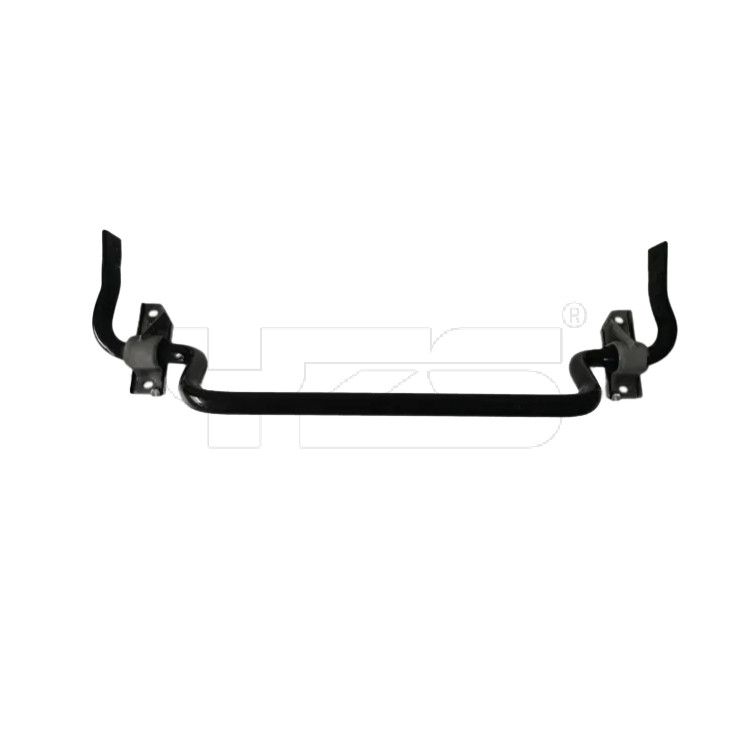
Why Sway Bars Need Brackets and Bushings
A sway bar is a crucial component of a vehicle's suspension system, designed to reduce body roll during cornering. Its mounting hardware, specifically the brackets and bushings, is essential for its proper function, durability, and performance. Here’s a detailed explanation:
1. Why Sway Bars Need Brackets and Bushings (为什么需要支架和衬套)
固定与定位 (Fixation and Positioning):
The sway bar is a freely rotating torsion spring. It is not directly bolted to the vehicle's frame or subframe. Brackets (金属支架) provide the solid anchor points that secure the bar to the chassis, holding it firmly in its correct position.
允许扭转运动 (Allowing Torsional Movement):
The primary job of the bar is to twist (torsion) when one wheel moves up relative to the other. Bushings (衬套, usually made of rubber or polyurethane) are placed between the bar and the brackets. They allow the bar to rotate smoothly within the brackets while preventing unwanted lateral or vertical movement. Without bushings, metal-on-metal contact would cause binding, noise, and failure.
吸收振动与噪音 (Vibration and Noise Dampening):
The bushings act as an insulator. They absorb high-frequency vibrations from the suspension and road, preventing them from being transmitted directly to the chassis and into the passenger cabin, thereby reducing noise, harshness, and vibration (NVH).
承受载荷与应力 (Handling Load and Stress):
The brackets and bushings must withstand immense shear and torsional forces generated during aggressive cornering. They ensure the twisting force is effectively transferred between the sway bar ends (via links) and the chassis.
2. The Role/Functions of the Sway Bar (防倾杆的作用)
The sway bar's core function is to counteract body roll (vehicle lean) during cornering. Here's how it works:
基本原理 (Basic Principle): It connects the left and right wheels (through the suspension arms or struts via end links) across the axle.
工作过程 (Operation):
直行 (Straight Line): Both wheels move up and down equally, the bar does not twist, and has minimal effect.
转弯 (Cornering): The vehicle's weight shifts outward. The outside wheel is compressed (jounces), while the inside wheel extends (rebounds).
力传递 (Force Transfer): This unequal motion causes the sway bar to twist along its axis. The twisted bar acts as a spring, resisting this uneven movement.
减少侧倾 (Reducing Roll): By resisting the compression of the outside wheel, the bar effectively "pulls up" on the inside wheel, reducing the vehicle's tendency to lean outward. This keeps the car's body more level.
带来的好处 (Key Benefits):
提升操控稳定性 (Improved Handling Stability): Flatter cornering provides more consistent tire contact with the road, increasing grip and driver confidence.
更精准的转向响应 (Sharper Steering Response): The vehicle reacts more quickly and predictably to steering inputs.
影响转向特性 (Influences Handling Balance): A stiffer front sway bar reduces understeer; a stiffer rear sway bar reduces oversteer. This allows for tuning the vehicle's handling balance.