Industrial Design Steps for a Sway Bar in Early-Stage Development
- Share
- Issue Time
- Dec 1,2025
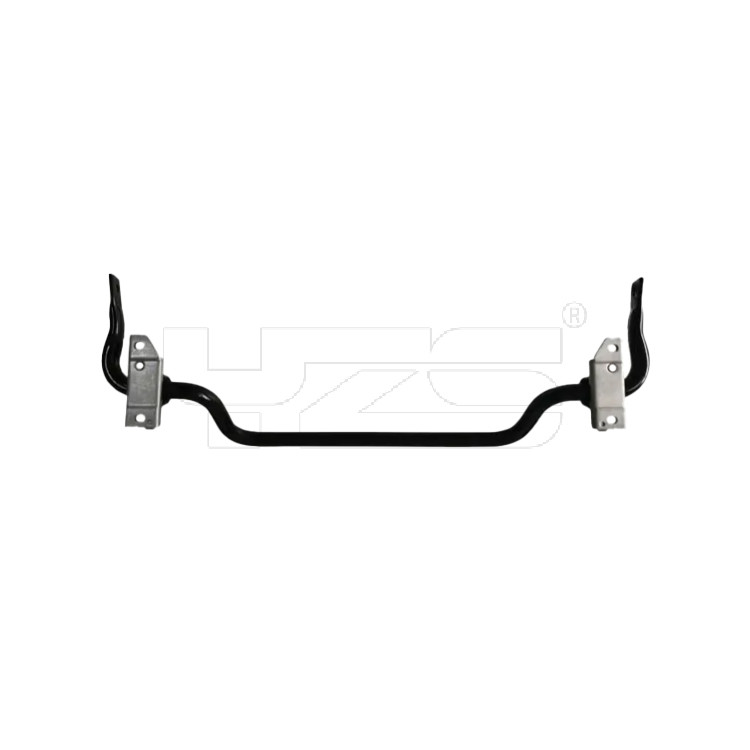
The term "Industrial Design" for a component like a sway bar refers to the entire process of defining, engineering, and validating the part for production. It's less about aesthetic styling and more about the engineering design process within an industrial context.
For a sway bar, the early design phase is critical and involves several key steps:
1. Requirement Definition & Target Setting
This is the foundational step where the design goals are established.
Vehicle-Level Targets: Engineers determine what the sway bar needs to achieve for the specific vehicle platform. This includes targets for:
Roll Stiffness: How much the vehicle should lean during cornering.
Handling Balance: Influencing whether the car is neutral, tends to understeer, or oversteer.
Ride Comfort: Ensuring the bar doesn't make the ride too harsh over bumps.
Packaging Constraints: The physical space available for the bar is measured. This includes clearance with the chassis, engine, exhaust, suspension arms, and drivetrain components.
Legal & Safety Standards: Compliance with regulations regarding component failure and proximity to fuel lines or brake hoses is defined.
2. Conceptual Design & Kinematic Analysis
In this phase, engineers create initial ideas and analyze the bar's basic function.
Type Selection: Deciding on the type of bar (e.g., solid vs. hollow, U-shaped vs. more complex geometries). A hollow bar is often chosen to reduce weight while maintaining stiffness.
CAD Modeling (3D): Creating initial 3D computer models of the bar and its mounting points (bushings, end links). This model is placed within the digital "package" of the vehicle to check for interferences.
Motion Analysis: Using software to simulate the full range of suspension travel. This ensures the bar and its end links do not bind, over-extend, or collide with other parts.
3. Detailed Engineering Design
This is where the conceptual design is refined with precise engineering specifications.
Material Selection: Typically, high-grade spring steel (e.g., 4140, 5150, or similar alloys) is chosen for its high yield strength and fatigue resistance.
Stiffness (Rate) Calculation: Using the bar's geometry—the length of the lever arms, the diameter of the bar, and whether it's solid or hollow—engineers calculate its torsional stiffness. This is often done with Finite Element Analysis (FEA).
Finite Element Analysis (FEA): This computer simulation is crucial. It subjects the virtual bar to forces to:
Predict stress concentrations, especially at the bends and connection points.
Ensure the bar can withstand extreme loads without permanent deformation (yielding).
Perform Fatigue Analysis to predict the bar's lifespan under repeated loading cycles.
Detail Design: Finalizing the design of all features: the precise bend angles, the shape of the ends (for connecting to end links), and the surface for the bushings to clamp onto.
4. Design for Manufacturing (DFM) and Assembly (DFA)
The design is optimized for how it will be made and installed.
Manufacturing Process Planning: Deciding on the primary manufacturing method, which is usually hot forming or cold forming. Hot forming is common for complex shapes to prevent cracking.
Secondary Operations: Planning for processes like shot peening (to improve fatigue life), machining the ends, and drilling holes for end links.
Assembly Considerations: Ensuring the bar can be easily installed on the assembly line. This includes designing clear locating features and ensuring bolt/nut access.
5. Prototyping and Validation
Before full-scale production, physical prototypes are built and tested.
Rapid Prototyping: Sometimes, 3D-printed plastic models are used for fit-and-function checks in a physical vehicle bucks.
Mule Vehicle Testing: The first functional prototypes, made from the chosen steel, are installed in test vehicles ("mules"). These vehicles are driven on test tracks to evaluate real-world handling, noise, vibration, and harshness (NVH).
Durability Testing: Prototype bars are subjected to rigorous lab tests on hydraulic rigs that simulate years of driving in a matter of days or weeks to validate the FEA fatigue predictions.
6. Design Finalization & Release
Based on the test results, the design is finalized.
Design Iteration: If any issues are found (e.g., stress cracks, incorrect stiffness, NVH problems), the CAD model and FEA are updated, and a new prototype may be made.
Production Release: Once the design meets all targets, it is released for production tooling and manufacturing.